
About the Procedure
The UroLift™ System is indicated for the treatment of symptoms due to urinary outflow obstruction secondary to benign prostatic hyperplasia (BPH), including lateral and median lobe hyperplasia, in men 50 years of age or older.

An enlarged prostate can narrow or even block the urethra.
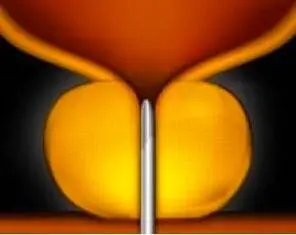
The UroLift™ Delivery Device is placed through the obstructed urethra to access the enlarged prostate.
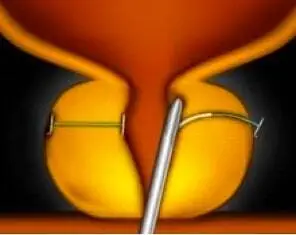
Small UroLift™ Implants are permanently placed to lift and hold the enlarged prostate tissue out of the way.
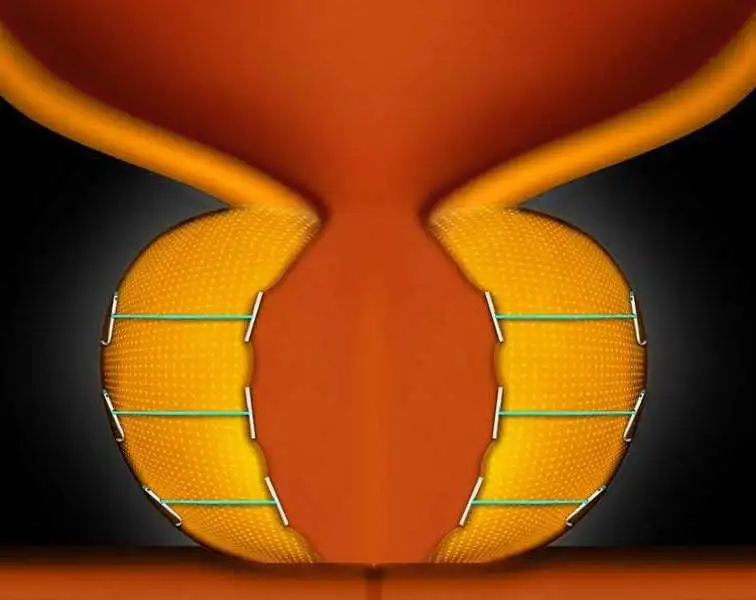
The UroLift™ Delivery Device is removed, leaving an open urethera to improve flow and provide lasting BPH symptom relief.5
Proven Mechanism of Action of the UroLift™ System
Only BPH MIST with consistent durability in real world and clinical trials4,5
Superior patient experience* among leading BPH procedures4,6-7
An early treatment alternative to BPH medications5
One of the most studied BPH MIST with 145+ peer-reviewed and clinical publications and 12,000 patients studied
Treatment with the UroLift™ System does not preclude future UroLift™ System treatments, TURP, or laser procedures.5
What Comprises the UroLift® System?
The UroLift® System is comprised of two main components.

UroLift® Delivery Device
It is inserted transurethrally through a rigid sheath under cystoscopic visualisation to reach the targeted area of obstruction. Each delivery device contains one UroLift® Implant.

UroLift® Implant
The obstructing prostatic lobes are held apart by small permanent UroLift® Implants that are deployed by the delivery device. Each implant is made with common implantable materials: nitinol, stainless steel, and PET suture.
* Typically, four implants are placed into the prostate.MRI Information
Non-clinical testing has demonstrated that the UroLift® Implant is MR Conditional.
View Instructions for Use
A patient with this device can be safely scanned in an MR system immediately after placement meeting the following conditions:
- Static magnetic field of 3.0 Tesla or less
- Maximum spatial field gradient of 1,500 Gauss/cm (15 T/m) (extrapolated)
- Maximum MR system reported, whole-body averaged specific absorption rate (SAR) of 4W/kg for 15 minutes of scanning (i.e. per pulse sequence) (First Level Controlled Operating Mode)
Under the scan conditions defined above, the UroLift® Implant is expected to produce a maximum temperature rise of 2.4°C after 15 minutes of continuous scanning (i.e. per pulse sequence).
In non-clinical testing, the image artifact caused by the UroLift Implant extends approximately 15 mm from the UroLift Implant when imaged with a gradient echo pulse sequence and a 3.0 Tesla MRI system.
The safety of the delivery system has not been evaluated in the MR environment, and therefore, the delivery system should not be used within the MR environment.
Patient implant cards are provided to inform the patient that the UroLift® Implant is MR Conditional and can safely be scanned only under specific MR conditions.
Read More


*Management estimates based on US and OUS market models. US market model estimates based on IQVIA Health Drug and Procedure data.
**Content based on survey of 1,000 US men and 1,000 US women conducted by Teleflex I NeoTract 2020. Sample size may vary depending on qualifying questions.
References
1.
Shore, Can J Urol 2014
2.
Roehrborn, J Urology 2013
3.
Roehrborn et al. Can J Urol 2017
4.
Bachmann, Eur Urol 2014 May
5.
McVary, J Urol 2016
6.
Mollengarden, Prostate Cancer
Prostatic Dis 2018
7.
Gilling, J Urol 2017
8.
AUA Guidelines 2003
Healthcare Professional Confirmation
The information on the page you are about to enter is intended for Healthcare Professionals
only.
By clicking the box below, you confirm that you are a Healthcare Professional.